
A garden fence has three jobs, and they are not always compatible. It should make the garden feel private, contribute to the look of the house, and make access harder for an opportunist. A tall, completely solid barrier may provide privacy, but it can also make a small garden feel boxed in. A decorative open fence may look elegant, yet do little to protect a side passage or hide a shed.
The best modern garden fence ideas are therefore less about copying a particular colour or panel shape and more about combining the right level of screening with good proportions, planting and a properly designed gate.
Table of Contents
- Start with the problem your fence must solve
- Modern garden fence ideas worth considering
- Fence styles compared
- How to create privacy without a dark wall
- Design the gate and boundary for security
- Planning, neighbours and maintenance checks
- Frequently Asked Questions
Start with the problem your fence must solve
Before choosing a material, stand in the garden and identify the actual line of sight. Are you overlooked from an upstairs window, exposed to a footpath, or simply trying to make the patio feel like an outdoor room? Each problem calls for a different response.
- Overlooking from above: consider a pergola, pleached trees, a raised screen or carefully positioned planting rather than making every boundary taller.
- Noise and wind: use a substantial boundary with planting in front. Slatted screens can filter wind, but they are not a substitute for a dense acoustic barrier.
- Rear access: prioritise strong posts, a secure gate, anti-lift hinges and a lock that can be operated from both sides.
- A small or shaded garden: avoid an unbroken dark wall. Gaps, pale finishes, mirrors used responsibly and green planting can keep the boundary from dominating.
My preference is to treat the fence as architecture, not as a leftover garden product. A boundary that repeats a colour or material from the house usually looks more intentional than one selected in isolation.
Modern garden fence ideas worth considering
1. Vertical slatted fencing
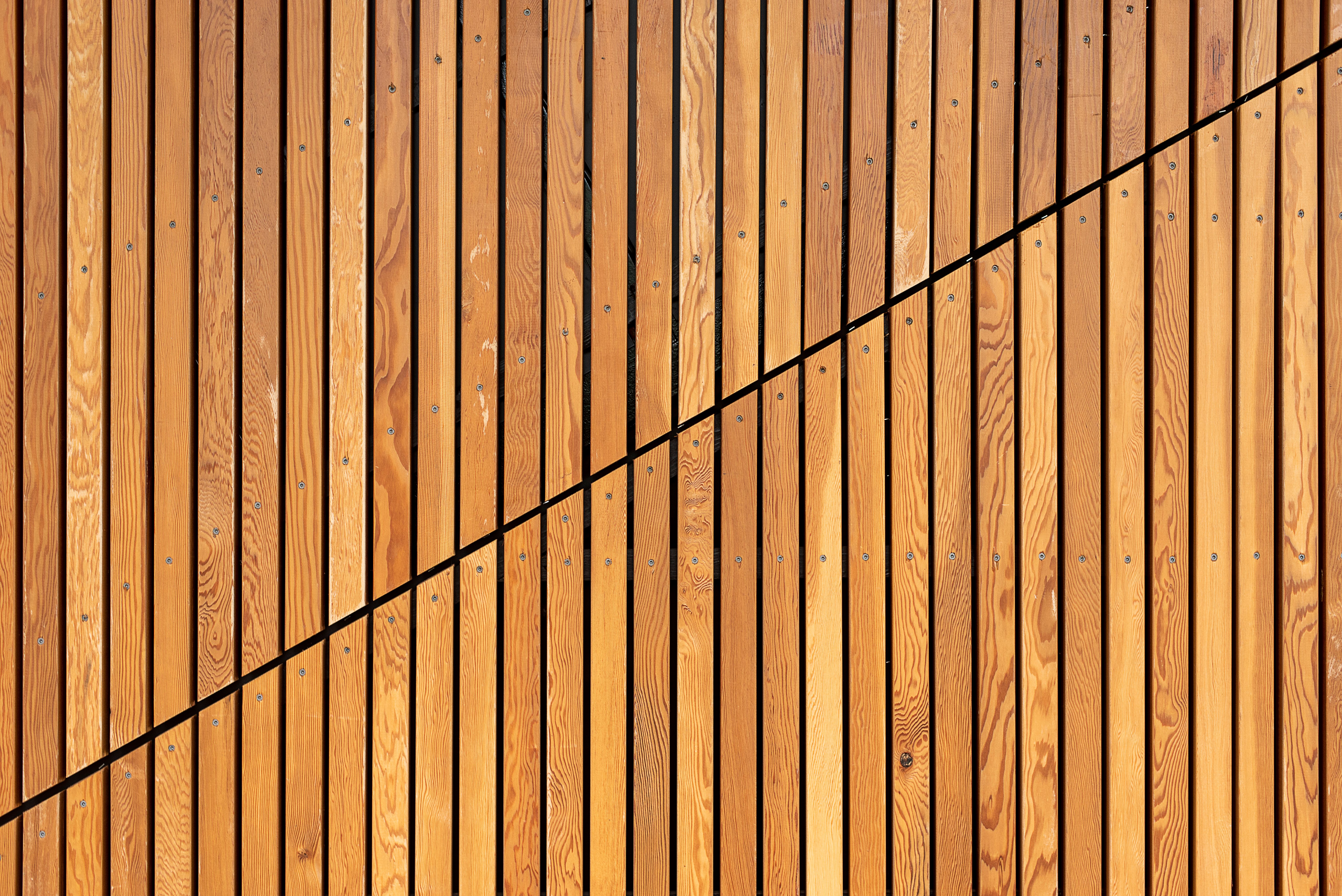
Vertical timber slats give a clean, contemporary appearance while allowing you to control privacy through the spacing. Narrow gaps admit light and maintain some visual connection; tighter spacing gives a more private finish. Vertical boards also avoid creating obvious horizontal footholds, which is useful on a security-conscious side or rear boundary.
Use a consistent frame and a durable finish, then soften the base with grasses or shrubs. The most successful versions do not try to make every inch identical: a change in slat spacing or a planted section can create rhythm without looking fussy.
2. Offset or hit-and-miss boards
With boards fixed alternately on opposite sides of the rails, a hit-and-miss fence looks relatively open from one angle and far more private from another. It is a good answer where you want daylight and airflow but do not want a direct view into the garden.
Check the view from both properties before installation. A pattern that looks private from your patio may reveal more than expected from a neighbour’s higher window.
3. A fence-and-hedge combination
A simple fence behind evergreen or semi-evergreen planting gives immediate structure while the plants mature. It also avoids the stark appearance of a long run of panels. The Royal Horticultural Society notes that hedges can provide privacy, shelter and wildlife value, although formal evergreen hedges require regular maintenance.
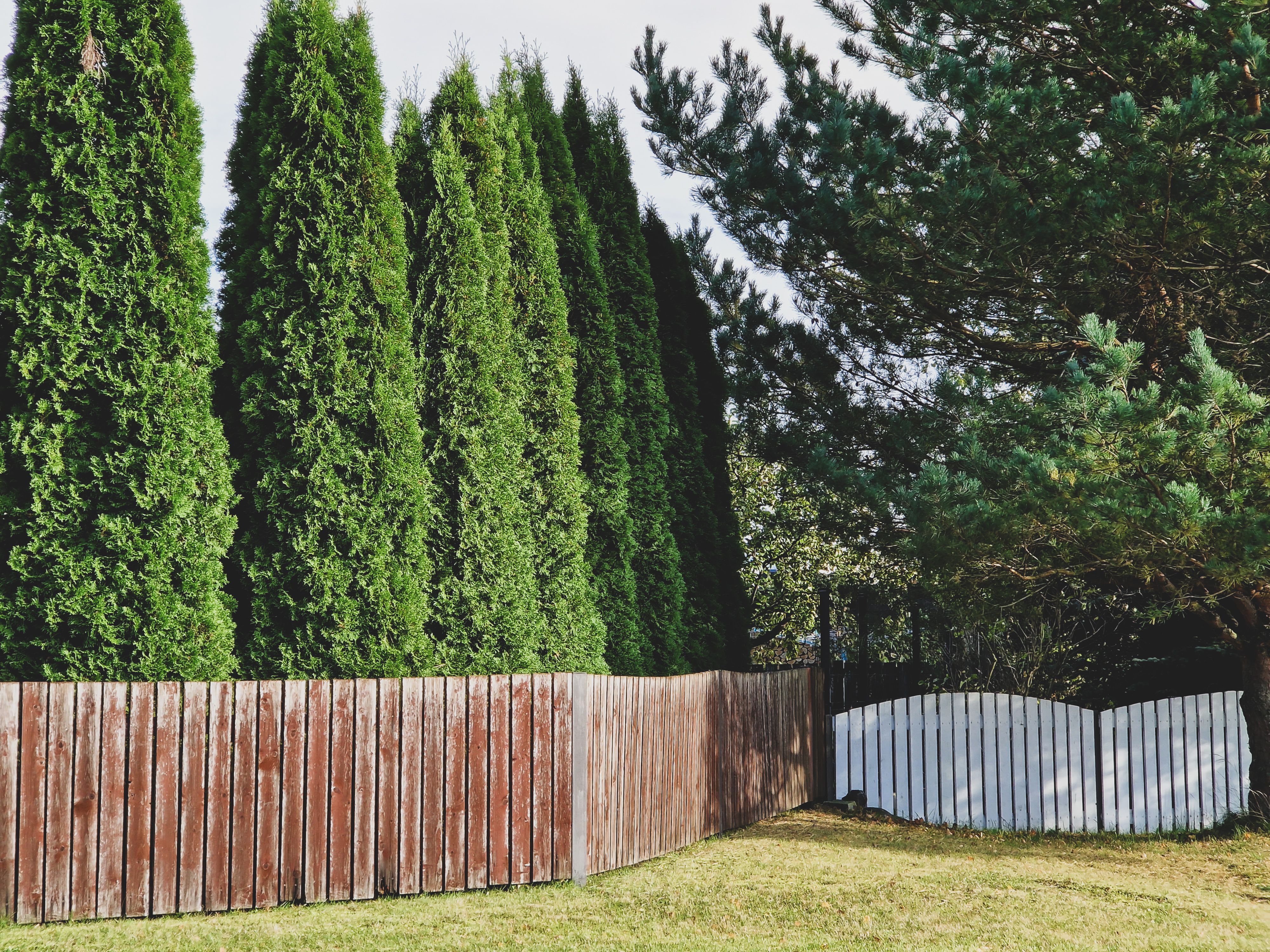
Choose plants for the eventual space, not the size they are when purchased. The RHS advises considering soil, ultimate height, root spread and your ability to maintain fast-growing screens. A narrow evergreen such as thuja may suit a restricted boundary better than a vigorous hedge that quickly outgrows its position.
4. A dark painted timber backdrop
Charcoal, deep green and near-black finishes can make foliage stand out and give a modern garden a calmer background. Dark paint is not automatically oppressive if the boundary is broken with planting, lighting and changes in height. It is especially effective behind silvery leaves, pale flowers and warm timber furniture.
Painted timber needs a maintenance plan. Inspect cut ends, joints and the area close to the ground, where standing moisture causes trouble sooner than on the face of a board.
5. Composite or mixed-material screening
Composite boards can be useful where a consistent finish and reduced routine painting matter more than the irregular character of natural timber. They can also be combined with masonry, powder-coated metal or timber posts to create a more architectural boundary. If you are comparing materials, review the details behind the finish, including how boards are fixed, how posts are supported and what happens when a damaged section needs replacing. One possible starting point for comparing materials is composite fencing, but the right choice still depends on site exposure, budget and the look you want.
6. Slatted metal or laser-cut panels
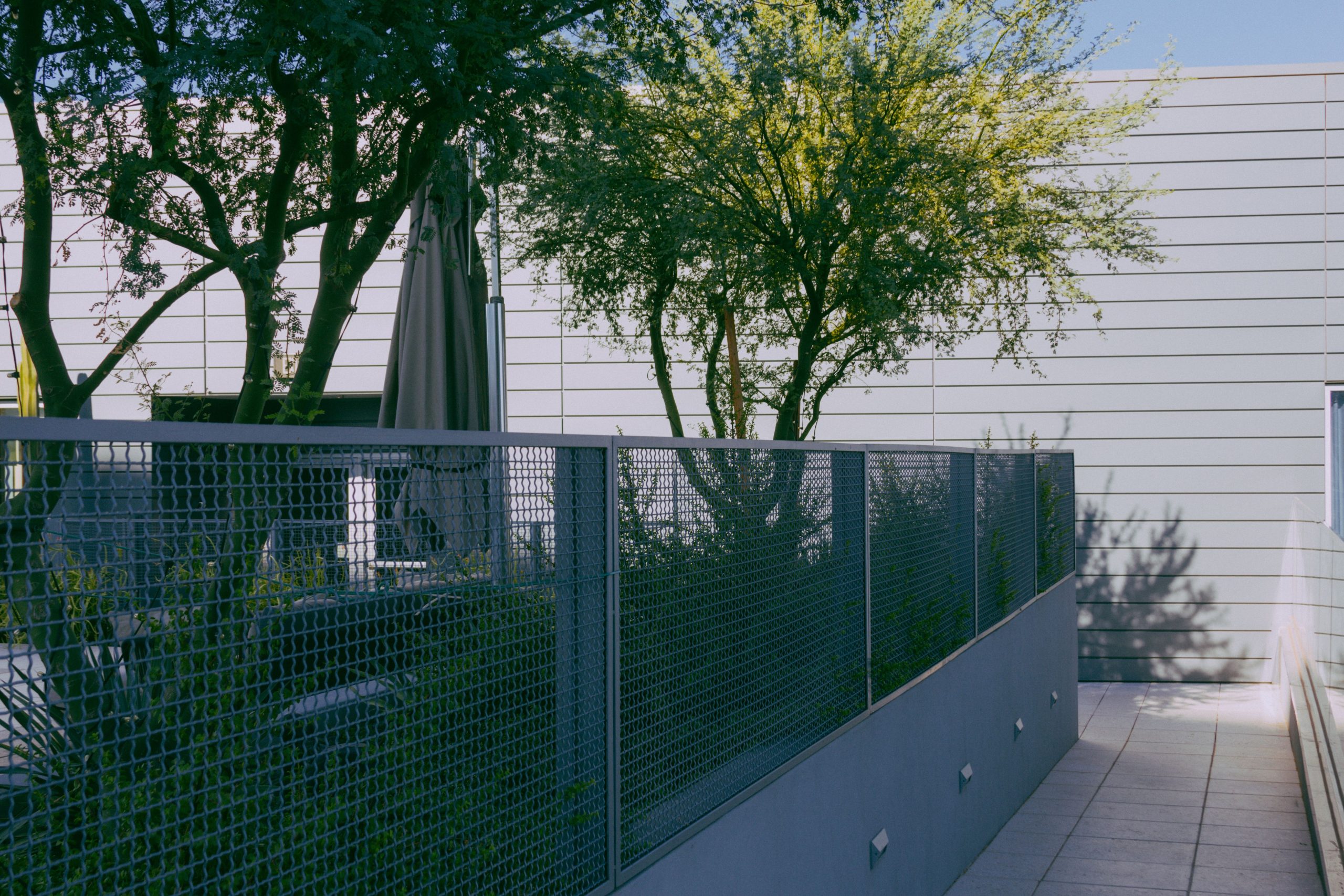
Metal screens work well as short sections rather than an entire perimeter. Use one to hide a bin store, frame a seating area or interrupt a long timber run. Perforated and slatted designs can preserve light while giving the garden a strong focal point.
7. Pleached trees or raised screening
When the privacy problem is mainly an upstairs view, raising the screen can be more effective than increasing the height of the whole fence. Pleached trees provide high-level screening on clear stems, leaving more usable space at ground level. They need annual pruning and careful establishment, so they are a considered design feature rather than a quick fix.
Fence styles compared
The table below is a practical comparison, not a ranking. The key point is that a fence can be visually private without being fully solid, while security depends heavily on construction and access details.
| Fence approach | Privacy | Design character | Best use | Main watch-out |
|---|---|---|---|---|
| Close-board or solid panels | High | Simple and adaptable | Rear boundaries and overlooked patios | Can block light and look heavy |
| Vertical slats | Medium to high, depending on spacing | Contemporary and precise | Modern gardens and feature screens | Gaps must be checked from different angles |
| Hit-and-miss boards | Medium to high | Textured and directional | Privacy with airflow and daylight | More complex installation |
| Open metal screen | Low to medium | Architectural and decorative | Dividing zones or screening utilities | Usually needs planting or another layer |
| Fence plus hedge | High once established | Soft and garden-led | Long boundaries and wildlife-friendly schemes | Watering, pruning and root space |
Source note: The height guidance and security principles referred to below are based on the UK Planning Portal and Secured by Design pages consulted in October 2026. Local rules and site conditions can differ.
How to create privacy without a dark wall
Privacy is about what can be seen from a particular position, not simply how tall the fence is. A short screen placed beside a seating area may do more than a tall boundary at the far end of the garden. Likewise, a group of narrow trees can block one unwanted view while preserving daylight on either side.
The RHS describes slatted screening as a way to filter wind and retain some views and light. That makes it particularly useful in a smaller garden, where a solid boundary can create a tunnel effect. Try combining:
- a solid section beside the patio or dining area;
- more open slats along the boundary where light matters;
- evergreen planting to fill gaps over time;
- a trellis or climber where added height is needed locally; and
- a change in colour or material to break up a long run.
Do not rely on bamboo planted directly into a narrow border without checking its behaviour. Some types spread aggressively, and even container-grown screens need watering during dry weather. A fence-backed hedge is slower than fitting panels, but it usually ages more gracefully.
Design the gate and boundary for security
A beautiful fence with a weak side gate is not a secure boundary. Secured by Design recommends solid rear fencing around 1.8 metres high, while keeping front boundaries lower where visibility matters. Its garden guidance also recommends that gates are kept shut and locked, that hinges prevent the gate being lifted off, and that locks are practical from both sides.
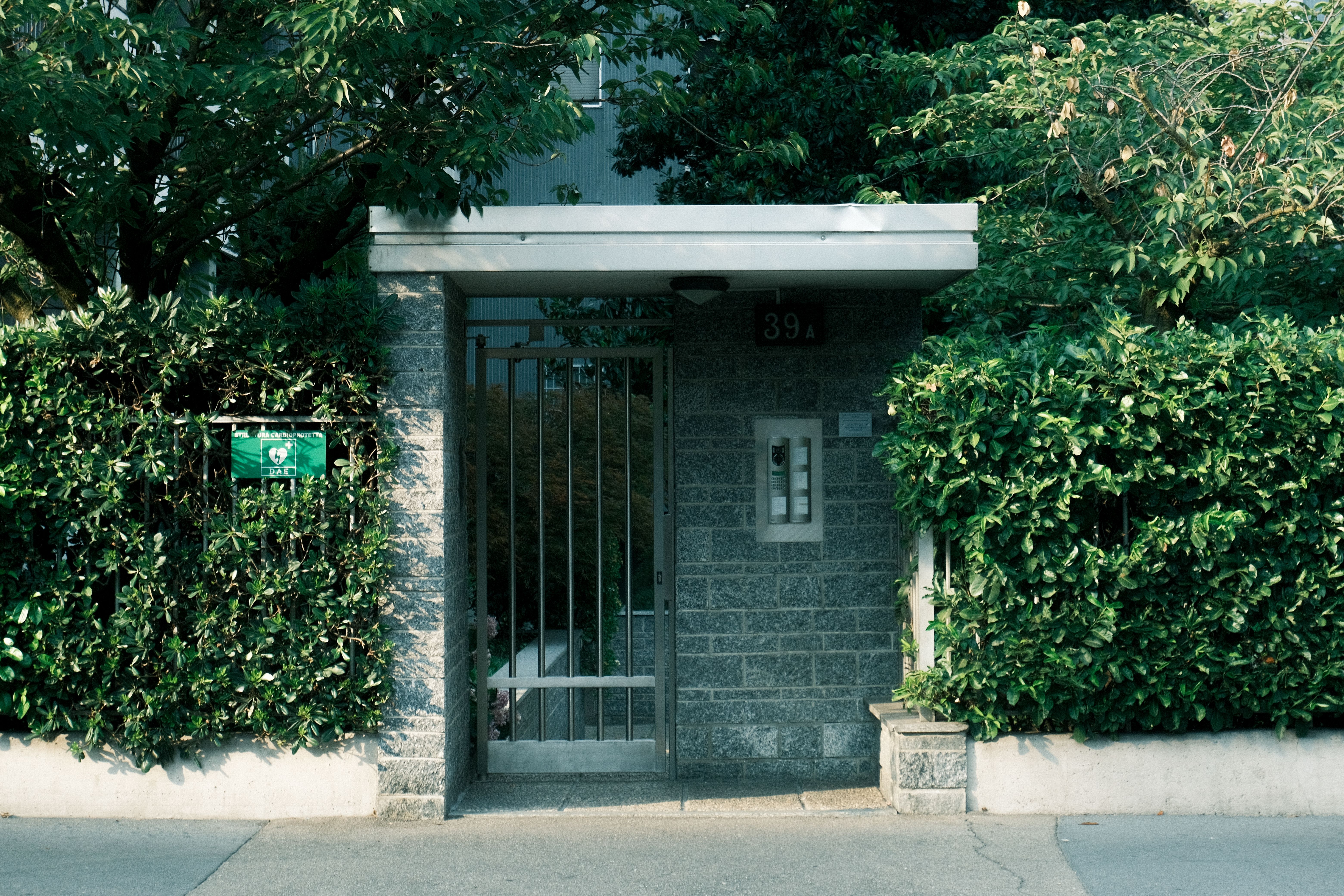
Security does not mean turning the garden into a fortress. It means removing easy opportunities. Specify a gate that is the same height and standard as the adjoining fence, avoid large gaps beneath it, and make sure the posts are fixed into sound ground. Keep bins, ladders and tools away from the boundary because a fence cannot compensate for equipment that helps someone climb or force an entry.
- Use robust posts and mechanically secure the panels or slats.
- Fit anti-lift hinges or hinge protection where the gate could otherwise be removed.
- Use a lock suited to outdoor conditions and check it after winter.
- Keep planting from concealing the latch, house windows or the approach to the gate.
- Use motion-sensitive lighting carefully so it improves visibility without disturbing neighbours.
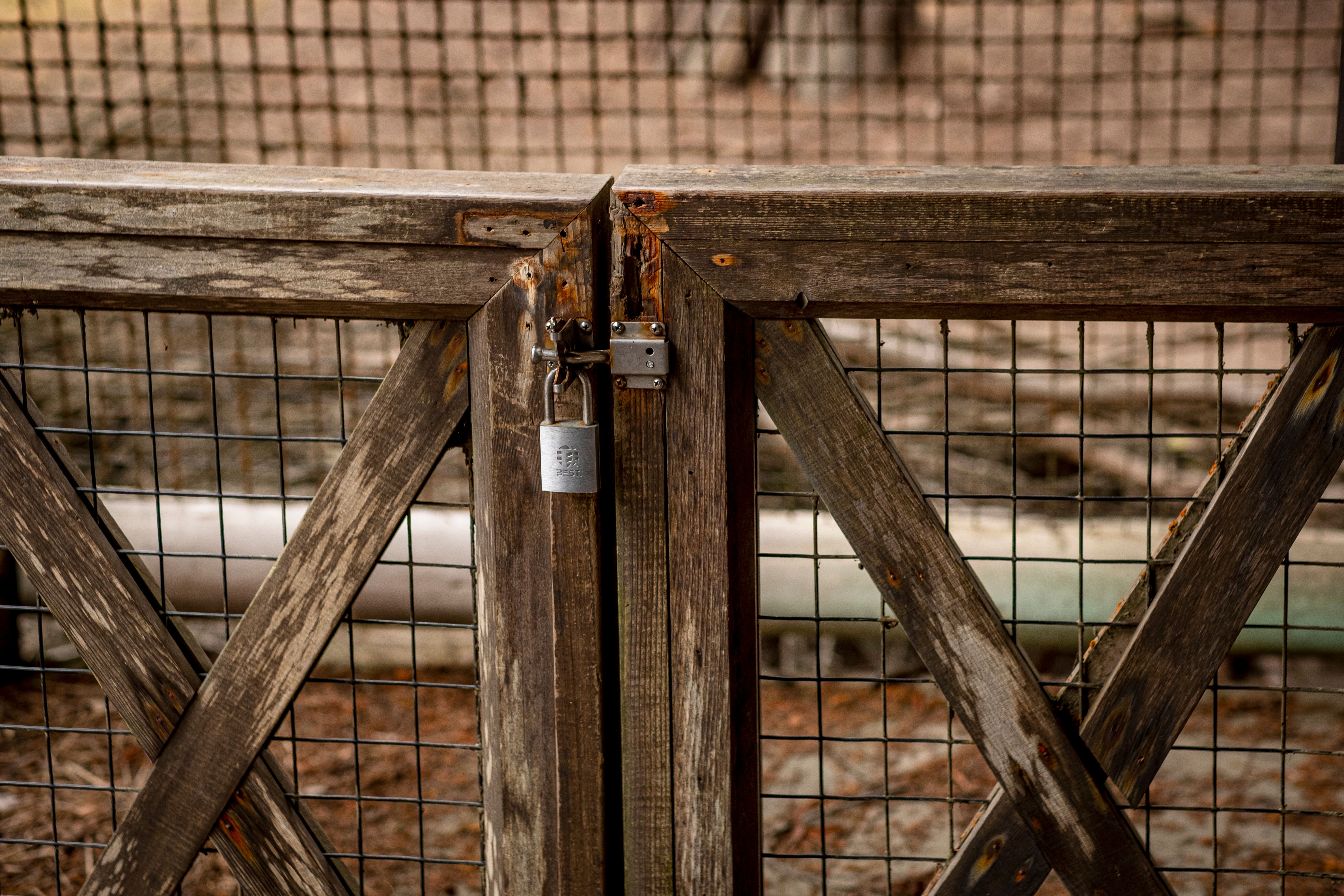
Dense or thorny planting can add another layer of deterrence, but place it thoughtfully. It should not create a hidden corner beside a door or make routine garden maintenance hazardous.
Planning, neighbours and maintenance checks
In England, the Planning Portal says planning permission is generally not required for a fence, wall or gate up to 2 metres high away from a highway, or up to 1 metre high beside a highway used by vehicles or its footpath, subject to listed-building, conservation-area, Article 4 and planning-condition exceptions. Rules can differ elsewhere, so check with your local authority before ordering materials.
Height is not the only practical issue. Confirm who owns the boundary, agree the finished face and maintenance access with neighbours, and check for drains, cables and uneven ground before setting posts. A fence that steps with a slope often looks better than one forced into a single level, but the gate and security height still need to work across the change in ground level.
Finally, plan the first year, not only installation day. Timber may need periodic cleaning or recoating; plants need watering while they establish; hinges and locks need inspection; and fast-growing screening needs pruning before it becomes a dispute.
Frequently Asked Questions
A boundary that earns its place
The most convincing modern garden fences do not shout for attention. They frame the garden, control the views that need controlling and leave room for planting, light and movement. Start with the sightline, build in security at the gate, and choose a finish you are prepared to maintain. That approach will produce a better result than choosing a fashionable panel first and trying to make the rest of the garden fit around it.